The Coat-Rack Cut: Letting Your Winter Wardrobe Shape Your Next Appointment

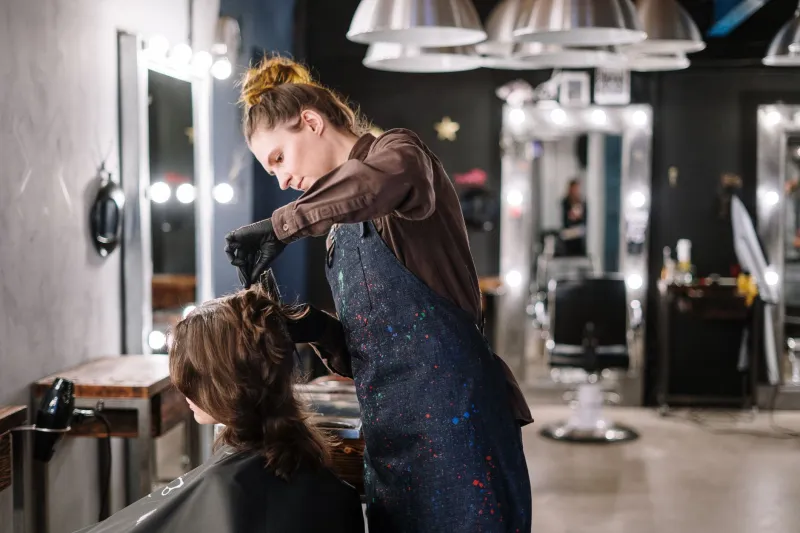
Photo: Florence6767, CC BY-SA 4.0, via Wikimedia Commons
There’s a moment in every winter appointment when the cape comes off, the mirror is angled just so, and the cut looks brilliant. Then you step outside, pull on a heavy coat, wrap a scarf around your neck and watch the whole thing reorganise itself. Not ruined, exactly. Just different. And usually not in the way you planned.
That’s where the collar test comes in. It isn’t a trend, a strict rule or another thing to add to your ever-growing hair to-do list. It’s simply a practical check that asks one sensible question before you commit to a new shape: how will this cut behave with the coat you actually wear? In a UK winter, that question earns its place in the consultation.
What the collar test actually is
Before your appointment, put on the coat you reach for most often. Add the scarf you genuinely wear, not the one you bought in a hopeful moment and never untangled. Look in the mirror with your hair down, then tucked behind one ear, then loosely gathered. Notice where it catches, where it flattens, where it frizzes, and where it suddenly develops a mind of its own.
That’s the information you take to the salon. Not a photo of someone else’s hair from a completely different climate, but a clear sense of how your hair meets your real-life outerwear. At Scissors Hair Salon, we’d much rather see the scarf than guess at it. A quick mention of your coat collar can change the way we texturise the ends, place the layers or decide how much weight to leave at the nape.
Why wool, scarves and hoods change the brief
Winter outerwear is not a neutral accessory. Wool creates friction. Scarves add bulk around the neck and jaw. Hoods press hair flat in one place and encourage static in another. Rain, central heating and the daily business of getting on a busy bus or train all leave their mark. A cut that relies on perfect, untouched volume is going to have a shorter shelf life than one designed with a bit of movement and resilience.
The collar test isn’t about choosing a boring haircut that can survive anything. It’s about making sure the cut you want still looks intentional once it has been tucked, squashed, rained on and released again.
Lengths that tend to pass the test
There’s no single collar-friendly length, but some placements are easier to live with than others.
A chin-length or jaw-grazing bob can look sharp and polished, but if your coat collar sits high, the ends may flick out or sit awkwardly on top of the fabric. That doesn’t make it a bad cut. It just means the styling and the consultation need to account for it.
Collarbone and shoulder-grazing lengths often work well because they can be tucked into a scarf or left loose without creating a solid block of hair at the neck. If you like a stronger shape, ask for internal layers or a slightly softer perimeter so the ends don’t sit like a shelf on your coat.
Longer cuts can be brilliant in winter, especially with face-framing pieces that can be pulled out of a scarf. The risk is weight. If the hair is very thick and left too solid, it can feel heavy under a hood and flattened by a collar. Removing some bulk underneath often makes more difference than taking length off the top.
Short crops are the easiest to manage under a scarf, but they can leave the neck exposed to cold and may need more frequent trims to keep their shape. Again, not a problem — just part of the plan.
Shapes and details that work harder
Soft layers around the face are your friend here. They give hair somewhere to move when it’s released from a scarf and stop the front from looking too solid. Invisible layers, point-cut ends and gentle texturising can all help the hair sit more naturally against a collar without looking thin or wispy.
If you have curls or waves, the collar test matters even more. Shrinkage can change the length dramatically once the hair dries, and a shape that looked generous in the chair can spring up above the collar by the time you’re outside. A dry cut or a consultation that accounts for your natural texture will always be more reliable than a wet-to-dry guess.
Fringes are another one to think about. A full fringe can look brilliant with a wool coat, but it may also sit flat under a hat or separate awkwardly when a scarf is pulled up. If you’re committed to the fringe, ask about styling options that are quick to reset — a little dry shampoo, a comb and a few seconds with a round brush can be enough.
How to bring it up in the consultation
You don’t need a technical speech. A few clear sentences will do.
Try: “I wear a high wool collar most days, so I’d like the back to sit flatter rather than kick out.” Or: “Can we keep enough softness around the front so it still works when I take my scarf off?” Or even: “I love this shape, but I don’t want to fight it every time I put my coat on.”
If you’re unsure, bring the scarf. A good stylist can hold it near your neck, check how the hair falls and adjust the plan before any scissors come out. It sounds simple because it is. The best consultations are often just a conversation about your actual life, not an idealised version of it.
Styling after the salon
Once you’ve left the chair, a few small habits make the collar test easier. Keep a light hand with product at the roots — too much oil or cream can make hair cling to a scarf. A tiny amount of serum or anti-static spray on the ends can help with flyaways, especially in heated buildings. If rain is forecast, carry a claw clip or soft hair tie so you can lift the hair away from a wet collar rather than letting it dry in an odd shape.
And don’t panic if your hair looks different after a commute. It’s supposed to. The aim isn’t hair that never moves. It’s hair that moves well, then settles back into something you recognise.
The point of the test
Your coat shouldn’t dictate your entire haircut, but it should absolutely have a say. Winter 2026 is already full of enough friction without adding a daily battle between your ends and a wool collar. Bring the scarf, mention the hood, show us the coat. A cut that works from salon to street is not a compromise — it’s just a better brief.