The Chair-Side Tutorial: Five Minutes That Save You a Week of Guesswork
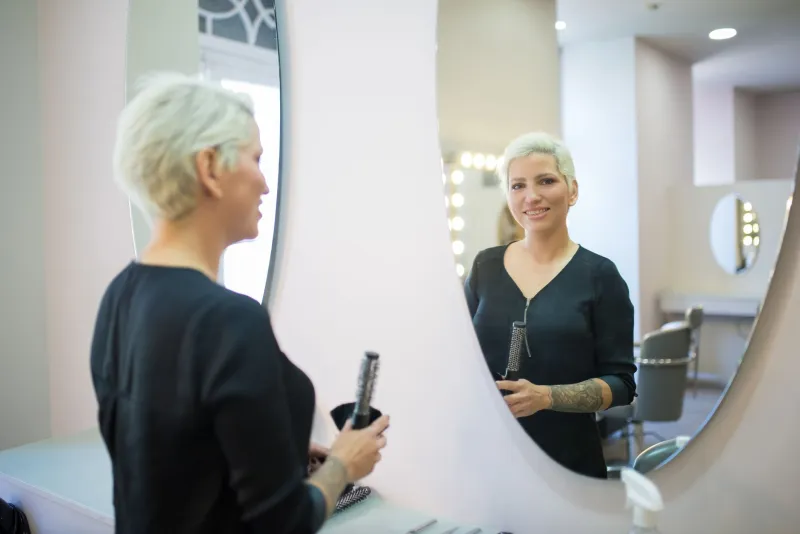
You've had the consultation, the cut, the colour, the blow-dry. The mirror has been spun, the compliments have been exchanged, and your hand is already reaching for your coat. Then it happens: your stylist picks up a brush and says, 'So, at home, you'll just…' — and you nod along, knowing full well you'll be texting the salon by Wednesday asking what on earth they did.
That final stretch of the appointment is the most underrated part of the whole visit. Not because the cut isn't the main event, but because a finished style you can't recreate is only doing half its job. Five focused minutes in the chair can save you a week of faffing, a shelf of products you didn't need, and the small indignity of a style that only works when someone else's hands are involved.
The Bit Everyone Skips
Most of us treat the handover like a polite epilogue. We're thinking about the parking meter, the next appointment, whether it's raining. Meanwhile, your stylist is handing over the exact information you paid for. The trick is to ask for a demonstration rather than a description. 'Show me' beats 'tell me' every single time — hands remember what ears forget.
Ask for the Move, Not the Product
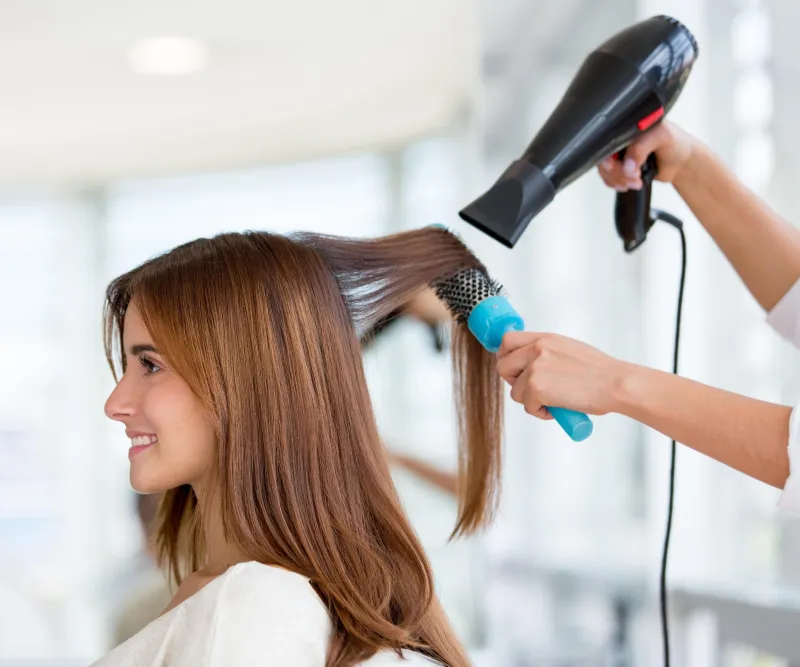
It's easy to leave with a bag of bottles and no clue what to do with them. Products are the least transferable part of a salon finish; technique is the bit that actually travels home. So instead of asking what they used, ask how they used it. Which way did they wrap the hair around the brush? Rough-dry first or straight in with tension? How hot, how long, how close to the root?
If they reach for a round brush, ask what size and whether a vent brush or a Denman-style paddle would do the same job on a Tuesday morning when you've got nine minutes and a train to catch. A good stylist will happily give you the lazy version — that's the one you'll actually use.
Brushwork: Two Things That Matter
When it comes to styling at home, most of the finished look comes down to tension and angle. Too little tension and you get frizz with ambitions; too much and you get a bend where you wanted a sweep. Ask your stylist to slow down for thirty seconds and show you the angle of the brush relative to the head — that small tilt is usually the difference between 'salon blow-dry' and 'I tried'.
Also ask about section size. If they're working in sections thinner than a slice of malt loaf, that's fine for a special occasion but miserable before work. Get them to show you the realistic version: bigger sections, slightly lower heat, a bit more patience.
Sectioning You'll Actually Remember
Nobody memorises a full salon routine, so don't try. Ask your stylist to give you a shorthand — top, sides, back, fringe — and to show you the order they'd tackle it in at home. Nine times out of ten, the front and the crown do most of the visible work, and the back can be roughed in and left alone.
If you've had a fringe cut, this is non-negotiable. Ask them to show you the exact direction they'd blow it, and what to do when it dries the wrong way. A fringe is a small piece of hair with strong opinions.
Weather-Proofing the Finish
A style that works in a still, warm salon and collapses the moment you meet a Manchester drizzle isn't really working. Ask directly: 'What does this look like in the rain?' A good stylist will adjust the finish on the spot — a touch more hold at the root, a smoother product through the mid-lengths, a cooler blast at the end rather than a hot one that leaves the cuticle open and eager to frizz.
For humidity, ask what to avoid rather than what to add. Usually it's over-touching and too much heat near the end of the routine. For wind, ask where the product should sit so the shape holds without going stiff. These are the small adjustments that make a salon finish survive an actual British day.
Hard Water, Soft Landing
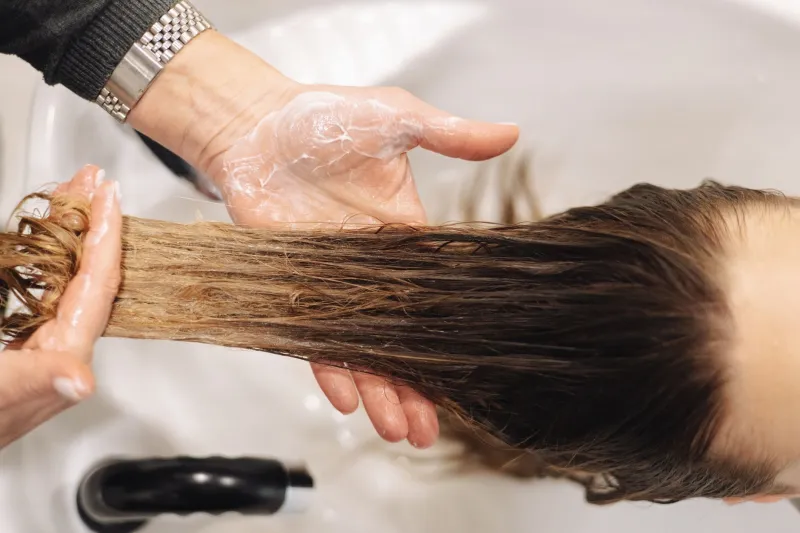
If you live in a hard-water area — and plenty of us do — the finish at home will never feel quite like the one in the chair unless you account for it. Ask your stylist how your water might be affecting the feel of your hair and what to tweak. Often it's as simple as a cooler final rinse, a clarifying wash every few weeks, or going a touch lighter on conditioning products near the root.
While you're at it, ask for the shower-head version of the routine. If the salon finish relies on filtered water and a professional nozzle, you need to know what the at-home compromise is. Nobody expects you to install a salon in your bathroom.
Watch Once, Do It Once
Here's the trick that actually sticks: ask to hold the brush yourself, in the chair, while your stylist guides your hand. It feels a bit silly for about eight seconds and then it becomes the most useful thing you'll do all appointment. Muscle memory is a wonderful thing.
With permission, film a thirty-second clip — hands and hair only, no faces — while your stylist narrates. It's far more useful than a screenshot of a finished style on someone else's head, because it's your hair, your length, your cowlick.
The Question to Ask at the Door
If you only remember one thing, make it this: ask your stylist what you're most likely to get wrong. It's a brilliantly disarming question, and the answer is usually specific and easy to fix — 'you'll probably take too much product', 'you'll brush it the wrong way when it's wet', 'you'll panic and straighten the ends'.
Then ask what the style should look like on day three, not day one. A good cut and finish should have a life beyond the salon glow, and knowing what 'normal' looks like stops you fighting your own hair by Friday.
Five minutes, one question, one demonstration. That's the whole handover — and it's the difference between leaving with a hairstyle and leaving with a skill.