The Whisper Trim: The Winter Appointment That Barely Touches Your Length

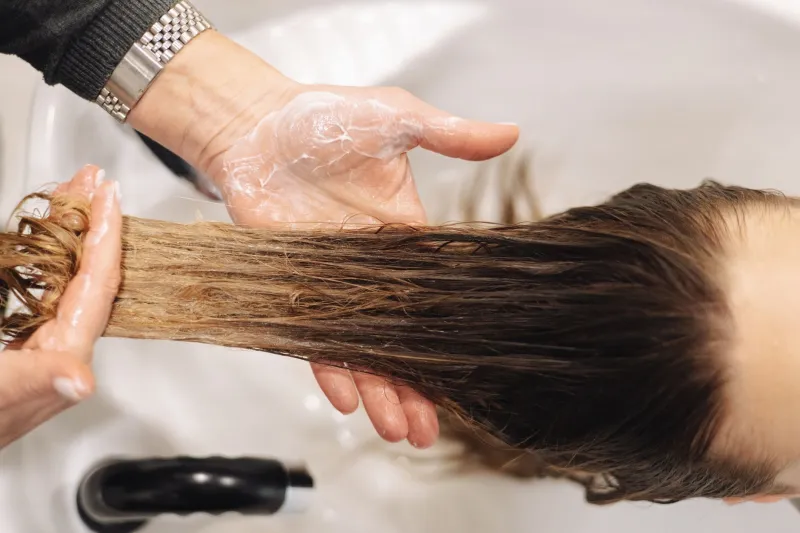
Photo: hairdresser trimming split ends close up fine hair salon scissors, via wallpapercave.com
By mid-November, hair appointments tend to split into two camps. One is the pre-party overhaul: a gloss, a blow-dry, maybe a fringe tweak before the Christmas diary fills up. The other is the anxious trim: you know the ends feel rough, but you are months into growing out layers, a fringe or a colour-led cut, and the thought of losing length makes you cancel altogether.
There is a middle path, and it is deliberately small. A dusting, sometimes called a micro-trim or an ends-only tidy, removes only the finest, split tips while leaving the shape and the bulk of your length alone. It is not a sneaky way to give you a full cut. It is a specific, useful salon appointment, and winter 2026 is a very good time to understand it.
What a dusting actually means
A dusting is a precision tidy, not a restyle. In practice, that usually means taking off a few millimetres — often one to three — from the very ends of the hair. Some stylists work on dry hair so they can see exactly where the split tips sit; others prefer to dust after washing, when the hair is combed straight and the ends are easier to read. Either way, the goal is the same: remove the whispery, uneven finish without changing the silhouette.
At Scissors Hair Salon, a dusting starts with a proper look at the ends rather than a automatic trip to the shampoo bowl. We will check where the split starts, how much weight the hair is carrying and whether the cut still has its original shape. If the answer is 'the ends are tired but the shape is fine', a dusting is likely to be the right call. If the layers have collapsed or the fringe has lost its line, a fuller cut is the more honest option.
Who it suits in winter 2026
A dusting is especially useful for anyone growing something out. That might be a curtain fringe that you want to reach your cheekbones, a bob that you are easing into a lob, or layers that you are trying to keep long while the top catches up. It also suits colour-led cuts, where you have spent time and money on a soft copper, a shadow root or a gloss and you do not want a standard trim to reset the shape before the colour has had its moment.
Fine hair often benefits too. Winter central heating, wool coats and daily heat styling can leave fine ends looking static and fuzzy, even when the hair itself is healthy. A tiny tidy can make the whole head look more polished without making the hair feel shorter or thinner.
It is less suitable if your ends are splitting well above the tips, if your layers have grown into a heavy triangle, or if you are trying to repair a cut that no longer sits properly. In those cases, a dusting can become a postponement rather than a solution. A good stylist will tell you that before the scissors come out.
How to ask without leaving with a bob
The phrase 'just a trim' is famously elastic. To one person it means two millimetres; to another it means a fresh shape. If you want a dusting, be specific and kind about it. Try: 'I would like a dusting, ends only, please. I am growing my layers out, so please keep the shape and do not shorten the layers or fringe.'
Show the stylist where you mean. Point to the last centimetre of your ends and ask them to show you how much they plan to take before they start. If you are having a dry check, ask them to turn the chair so you can see. If you are growing out a fringe, say that you want the fringe dusted rather than reshaped. And if you are booking before a big event, mention the date — a stylist can then decide whether a dusting alone is enough or whether your style needs a little more support.
It also helps to book the right amount of time. A dusting is quick, but it still deserves a consultation and a proper finish. Do not squeeze it into a five-minute gap between colour appointments and expect a full shape check.
Why it works with party-season styling
Party hair is often about finish: a smooth blow-dry, a sleek ponytail, a soft wave that catches the light. Split ends are most visible in exactly those styles, because they catch on the brush, frizz at the tips and make an otherwise polished look seem slightly fuzzy. A dusting gives you a cleaner line without the stiffness of a fresh full cut.
It also preserves length for updos and half-up styles. If you are planning a Christmas party look with a low bun, a ribbon tie or a gentle tonged wave, having a little more length to play with is useful. A dusting lets you keep that length while making the ends look cared for. Pair it with a gloss or a simple blow-dry and you have a party-season appointment that feels considered rather than drastic.
The aftercare that makes it last
A dusting is only as good as the weeks that follow. Use a heat protectant before tongs or straighteners, especially if you are styling more often than usual in December. Keep the ends conditioned, but do not assume every rough end needs a bond treatment; sometimes it just needs a tiny trim and a break from hot tools. A soft hairband and a satin pillowcase are small, unglamorous helpers that reduce friction while you sleep.
Most clients can stretch a dusting for six to ten weeks, depending on how quickly their hair splits and how much heat it meets. If you colour your hair, ask your stylist whether the dusting should sit before or after your colour appointment. And resist the kitchen-scissors temptation between visits. A proper dusting is a small, precise job, and it is worth leaving to someone who can see the whole shape.
The bottom line
A dusting is not a compromise and it is not a way of avoiding the salon. It is a smart, specific appointment for hair that is nearly where you want it to be. If you are growing out a fringe, protecting a colour-led cut or simply trying to get through party season without losing length, ask for a dusting by name. The result should feel almost invisible — and that is exactly the point.