The Over-Repair Habit: Why Your Hair Needs Fewer Bond Treatments in 2026
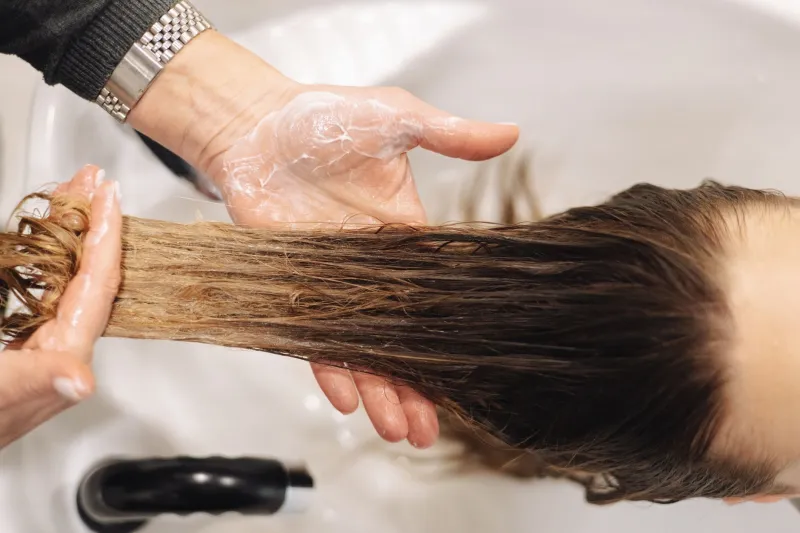
There’s a moment in every salon when a client opens their bag and produces three bond-building products, a mini mask and a serum they were told would ‘fix’ the damage. It is always said with the best intentions. It is also, increasingly, the reason their hair feels stiff, coated or just… stuck.
Bond-builders are not the villain here. They can be genuinely brilliant for the right hair at the right time. But somewhere between the launch of the first salon bond treatment and the current shelf-load of at-home versions, we turned repair into a default setting. In 2026, the smarter move is not more bonding. It is better diagnosis.
The repair reflex has gone into overdrive
Hair feels dry? Bond treatment. Frizz? Bond treatment. Colour faded? Bond treatment. Breakage? Another bond treatment. This is what we mean by over-repairing: treating every symptom as though the answer is a bond, rather than asking what the hair is actually doing.
At Scissors Hair Salon, we are not anti-bond-builder. We are anti-guessing. A bond treatment is a targeted tool, not a personality. If your hair has been lightened, chemically straightened or put through repeated heat styling, there may well be a place for it. If your hair is simply dry from central heating, rough from UK hard water or overdue a trim, a bond treatment is unlikely to be the hero you think it is.
What bond-builders can — and cannot — do
Bond-building products are designed to support the bonds inside the hair, particularly after chemical or mechanical stress. They can help hair feel stronger and less fragile, and they can be a useful part of a salon plan after colour work. What they cannot do is mend a split end, replace moisture, remove mineral buildup or give a grown-out shape a new lease of life.
That distinction matters. Hair is not a wall that can be patched indefinitely. If the ends are splitting, no amount of bonding will close them. If the hair feels rough after washing, the issue might be hard water or product buildup rather than weakened bonds. If the hair is snapping in the same spot every time, the cause might be a tight ponytail, a hot brush or a very old pair of straighteners.
Overuse can also leave hair feeling coated or brittle. Layering several bond products, then adding a mask, then a serum, is not automatically a stronger routine. Sometimes it is just a heavier one. And when hair feels heavy, stiff or dry after all that repair, it is tempting to add another product. That is the loop we want to break in 2026.
The signs your hair is asking for something else
A few simple checks can tell you more than a shelf full of labels.
- The wet stretch test. Take a single wet strand and stretch it gently. Healthy hair should stretch a little and bounce back. If it snaps immediately, it may be brittle or lacking elasticity. If it stretches like chewing gum and does not return, it may be over-moisturised or structurally weak. Either way, it needs a proper diagnosis, not another random bottle.
- The ends test. Look at your ends in daylight. Are they see-through, split or catching on each other like Velcro? That is a trim conversation. Bond products can make the surface feel smoother for a while, but they cannot rebuild a frayed end.
- The buildup test. Does your hair feel coated, dull or heavy soon after washing? You may need a clarifying or chelating wash, especially if you live in a hard-water area. Bonding on top of buildup is like painting over a dirty wall.
- The breakage map. If breakage is concentrated at the front hairline, near the crown or where you tie your hair up, look at mechanical habits first. A silk scrunchie and a gentler brush may do more than another treatment.
The trim-first reality check
A good trim is not the boring answer. It is often the efficient one. Split ends travel up the hair shaft, and once they have split, they stay split. A small dusting or a proper shape cut can make hair feel instantly thicker, smoother and easier to manage, because you are no longer trying to detangle damaged ends every morning.
In the UK, this matters even more as we move through autumn and winter. Central heating, wind, rain and hard water all put pressure on the mid-lengths and ends. If your hair is already fragile, a trim plus a sensible moisturising routine will usually outperform a complicated bond-building stack. That does not mean you can never use a bond treatment again. It means the trim comes first, and the treatment supports the plan rather than replacing it.
How UK stylists are rebalancing aftercare in 2026
The shift we are seeing in salon is towards fewer products used more deliberately. Instead of a bond treatment every wash, stylists are spacing them out. Instead of layering three repairing products, they are choosing one bond product and one moisturising conditioner. Instead of treating every hair complaint as damage, they are asking three questions: What does the hair feel like when wet? How does it break? What has happened to it in the last twelve weeks?
That last question is often the most revealing. Colour, heat, extensions, tight styling, hard water and a long stretch between cuts all leave clues. A balanced routine in 2026 looks less like a rescue mission and more like maintenance: a chelating wash when needed, a moisturising mask once a week, heat protection every time, a sensible trim schedule and a bond treatment only when the hair genuinely calls for it.
A simpler shelf, a stronger head of hair
Bond-builders can stay in your routine. They just should not run the whole routine. If your hair is chemically processed or going through a fragile patch, use them with intention and ask your stylist how often. If your hair is healthy but a bit dry or rough, start with moisture, water quality and a trim. If your ends are splitting, book the cut. If your hair feels coated, clarify first.
The best hair in 2026 will not belong to the person with the most repair products. It will belong to the person who knows when to stop repairing and start listening. And sometimes, that starts with a pair of scissors.