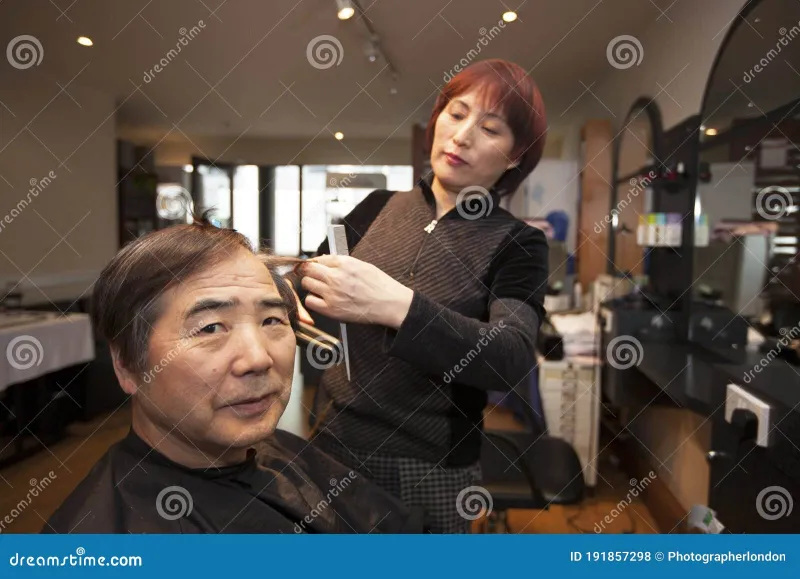
Bought, Wrapped, Booked: Giving a Hair Appointment This Christmas

Photo: Louis-Claude Vassé, CC0, via Wikimedia Commons
There's a certain kind of Christmas present that arrives in an envelope, weighs almost nothing, and quietly rescues someone's January. A hair appointment, paid for in advance, is one of the most useful gifts going — and also one of the easiest to get slightly wrong. Buy too specific and you've booked them into something they didn't want. Buy too vague and the voucher sits in a drawer until it expires.
So here's the version we'd give a friend: how to choose the service, what the stylist level actually means, which small print matters, and how to make the whole thing feel like a present rather than a to-do.
Start with the service, not the number
The instinct is to pick a budget — £50, £100, whatever feels right — and hand it over. But salon vouchers work best when they're attached to an actual thing. “A cut and finish” reads better than “£60”. It gives the recipient permission to book the appointment they've been putting off, and it tells the salon what to expect when they call.
For most people, a cut and finish is the safest gift. It's the appointment everyone needs eventually, it doesn't require a consultation six weeks in advance, and it suits almost any hair type. A blow-dry is the low-commitment option — great for someone who's curious about the salon but not ready for a change, or for a teenager's first proper appointment. A colour voucher is the one to think about carefully, and we'll come back to that.
If you know they've been eyeing a particular treatment — a gloss, a scalp service, a bond repair add-on — name it on the card. Salons are usually happy to write a voucher for a specific service, and it removes the “what do I even ask for?” hesitation that stops people booking.
The stylist-level question nobody asks
Most UK salons price by level: newly qualified, stylist, senior, director. The gap between them can be £20–£40 on a cut, and more on colour. If you're buying for someone who already has a stylist they love, buy at that level — or just ask the salon to put the value against their usual person. There's nothing worse than a voucher that quietly downgrades someone's regular appointment.
If they don't have a regular stylist, a senior stylist voucher is a good middle ground: experienced hands, a sensible price, and enough time booked for a proper consultation. Don't assume the most expensive name is the right gift. Some people would rather have two appointments with a stylist than one with a director.
Colour is a commitment — gift it carefully
Colour vouchers are generous and genuinely lovely, but they're not as simple as a cut. Most salons will want a consultation first, and any new colour client needs a patch test at least 48 hours before the appointment. That means the voucher needs a note attached: “call and book a consultation — they'll patch test you.” Otherwise your recipient rings up on a Saturday expecting highlights and leaves with a diary date instead.
Be honest about scope, too. A voucher for “a colour” could mean a root tint or a full balayage, and the price difference is significant. If you're buying for someone whose colour routine you don't know, a monetary voucher with a suggested service is kinder than a service voucher that doesn't quite cover it. And if they've been thinking about going lighter, blonder or redder, let them make that call — a colour voucher is a nudge, not a decision.
Read the small print before the till
Three things to check at the desk, every time.
Expiry. Salon vouchers vary wildly — some run six months, some a year, a few longer. Ask, and get it written on the voucher itself. December-bought vouchers often get used in January or February, so a short expiry is fine if you flag it; a short expiry nobody mentions is how gifts turn into guilt.
Transferability. Can the recipient pass it to a friend, or use it against products? Can it be split across two appointments? Many independents will say yes; some won't. It's worth knowing before you wrap it.
Redemption rules. Is it valid at one branch or several? Does it cover peak pricing — Friday evenings, Saturdays, the week before Christmas? Is it redeemable against retail? None of this is a dealbreaker, but it's the difference between a smooth gift and an awkward phone call in March.
Where the voucher works matters
A voucher for a salon two hours away is a lovely thought and a logistical headache. If you're buying for someone in another city, buy from a salon near them — or from a group with branches they can actually reach. Independent salons are often the better gift: they tend to have more flexibility on transfers, and the recipient gets a proper local relationship out of it.
If you're buying from us, the voucher is valid across our chairs, and we're happy to talk through which service makes sense for the person you're buying for. That conversation is free, and it's usually the difference between a good gift and a great one.
The product pairing that gets it used
Here's the trick that turns a voucher from “nice” into “used by mid-January”: pair it with one product that supports the appointment. Not a hamper — one thing, chosen well.
For a cut, a texturising spray or a small bottle of finishing oil. For colour, a sulphate-free shampoo or a weekly mask that protects the investment. For a blow-dry, a heat protection mist. Keep the receipt and tell them they can swap it — the point is the thought, not the exact bottle.
It also solves the “I don't want to spend £90 on myself” problem. The voucher covers the appointment; the product covers the bit they'd usually skip.
Presentation counts (a lot)
A voucher printed on A4 and folded into a card is fine. A voucher with a note — “for the appointment you keep postponing”, “book the consultation first, they'll explain the patch test”, “your stylist is [name], ask for her” — is better. If the salon offers a printed card or a gift box, take it. If not, a decent envelope and a handwritten line does the job.
And if you're giving it as a Secret Santa or a work gift, check the budget against the service. A £25 voucher won't cover a cut in most UK salons in 2026; it will cover a blow-dry or a product. Either buy at the right level or choose the smaller service honestly.
A voucher is an invitation, not a summons
The last thing to get right is the tone. A hair voucher should feel like permission, not a hint. Don't book the appointment for them, don't specify a style, and don't attach a “you'll feel so much better” note unless you're very sure of your audience.
The best version of this gift is simple: a service, a stylist, a date range, and a sentence that says “whenever suits you”. That's it. The rest is January's problem — and January is exactly when a good salon appointment earns its keep.